

I'm Necessary
Through Industry

“Sorry the world is showing you what it is without any of the protections you are so clearly used to.”
“You do not want friends!, You want people to make the hierarchy of your world to make sense to you.”
“You are hard-wired to exploit people’s personalities.”
“Whatever Genetic Blame game It does not absolve you from how you choose to act now.”
“A fucking sex object and a victim that you conveniently bounce between when it suits you.”
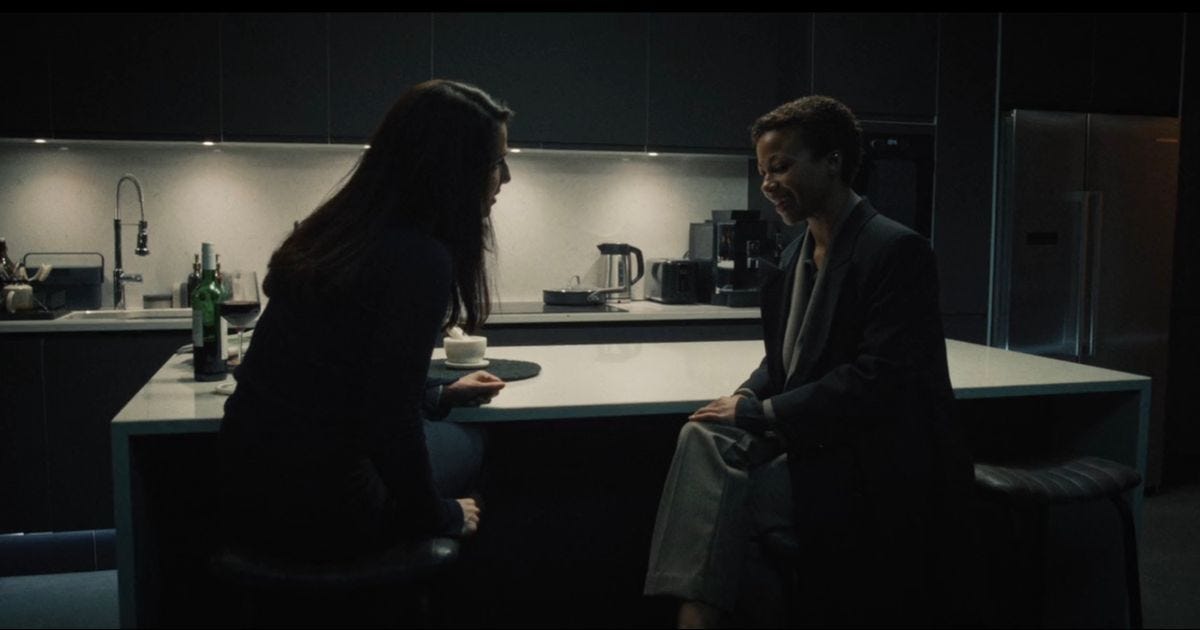
This has to be one of the best and most dynamic scenes from the entire series of Industry. If I could summarise the show in one sentence, it’s about young people trying to make it in a brutal industry while also trying to find themselves in the process.
But honestly? What I love most about Industry is that its characters aren’t just characters. They feel like exaggerations of the worst parts of us. The parts we recognise in ourselves and in people we know but rarely say out loud. And I think that’s exactly why the show works so well, and why I find myself genuinely obsessed with it.
The self is made. The self is created.
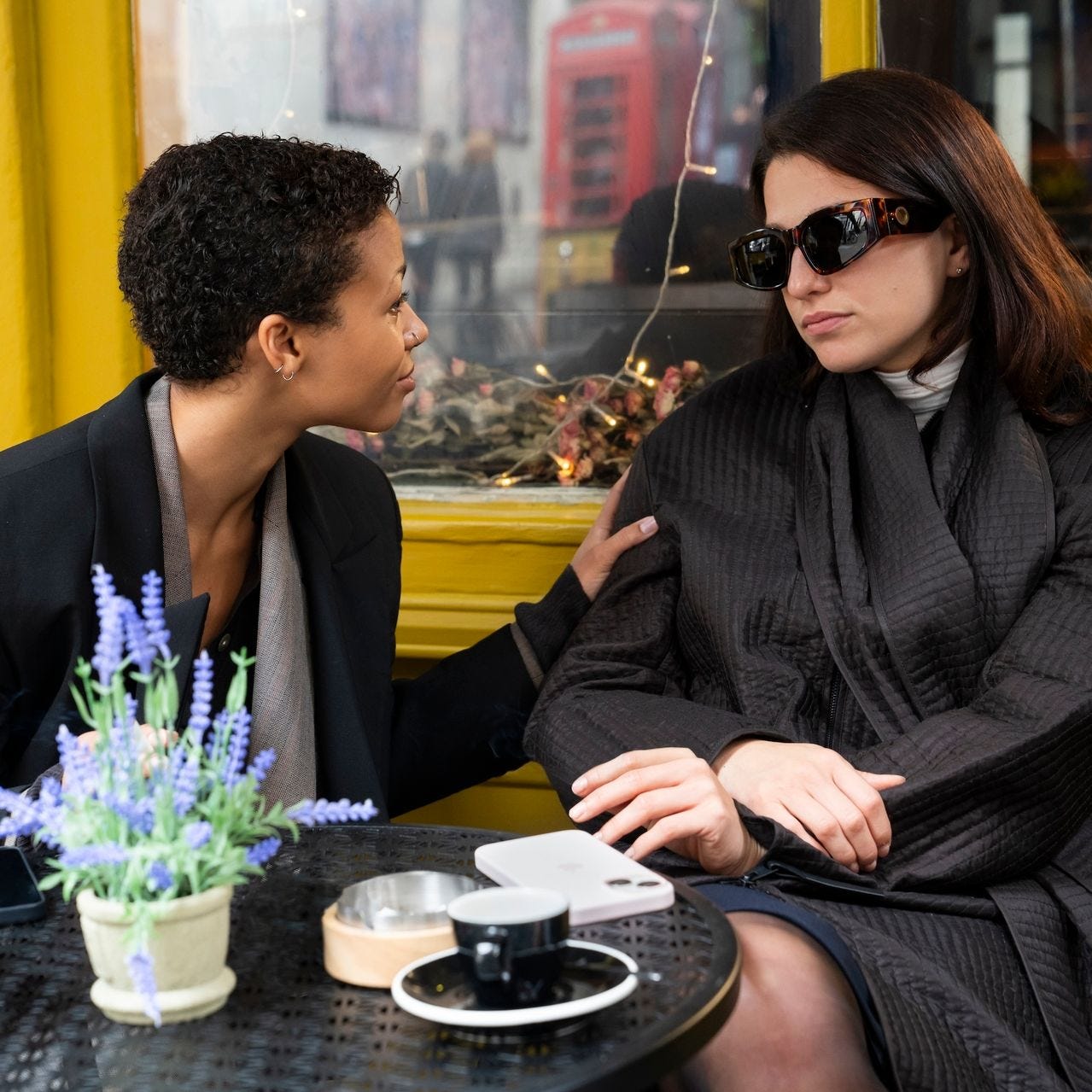
At the centre of Industry are two characters: Yasmin and Harper. And to me, they represent two fundamentally different ways of moving through the world.
Harper represents those who believe the self is made ; people who try to carve their own path, overcoming the obstacles of class, background, and institutional barriers to become powerful in their own capacity. Think Eric and people like him.
Yasmin represents someone who believes the self is created, someone born into privilege with the world seemingly at their beck and call, yet constantly seeking affirmation from it. Instead of discovering her own value, she waits for someone else to tell her she’s special. Think Henry.
What Industry does so well is explore the tension between privilege and self-creation while also forcing its characters to confront their own trauma and limitations. Some characters leave the industry and find something better suited for them. Others become consumed by their worst habits. And some simply fail upwards until the consequences finally catch up to them.
There’s a TikToker/substacker Tell the Bees I watch who says something I’ve always found interesting and something I also personally believe in: the world is divided into two brackets, those who believe the self is made and those who believe the self is created.
Watching Industry, I kept thinking about that idea. And what makes the show so compelling to me is that Harper and Yasmin don’t just represent two personality types, they represent two very real tendencies in human nature. The pull toward building yourself versus waiting to be built. And both of those tendencies, taken to their extreme, become their own kind of destruction.
And like all good writing, the show allows you to see parts of yourself in the characters. I’m not saying I’m like them, but it becomes easier to understand why they make the decisions they do.
Yasmin: waiting to be found necessary
Let’s start with Yasmin.

“Oh dear Yasmin… pathetic attention-seeking whore. Well, don’t blame her for the sins of her father. She’s unbelievable.”
When we first meet Yasmin, she’s someone trying desperately to be respected; trying to be necessary. But with each season, that attempt fails more and more. People can’t seem to see past her lack of technical ability, her insecurity, or the fact that she constantly undermines herself.
It feels like she is always searching for validation.
And when she’s presented with the opportunity to choose someone who genuinely values her, someone who truly sees her, she doesn’t take it. Instead, she gravitates back toward hierarchy and privilege, choosing systems that reinforce the same power structures that have always defined her.
That’s why she feels like someone who believes the self is created. She waits for validation instead of building it herself. And this mostly stems from the awful sexual trauma the show alludes to, which she most likely experienced from her own father.
Then by the end of season four, when Yasmin finally has the chance to make a decision entirely on her own terms, she ends up settling back into the very system that ruined her life in the first place. It’s almost as if she refuses to learn from the past. We end with her playing a voice note from her father lying on the floor as she has a slow panic attack, and I think the scene represents how she is refusing to overcome, or even accept, her trauma.
I tried to understand Yasmin. I really did. But with each season, it became harder.
That horrific boat scene with her father:
“You’re a fucking worm, you’re a fucking whore!!” “The way You! Look at me”

This scene reveals everything about the environment that shaped her. And yet, even after that moment, she continues falling deeper into unresolved trauma instead of confronting it. She continues to feed into the same system, transferring her trauma to a new and different scenario where she will still not be found necessary.
To me, Yasmin is the most tragic character in the show. Not because bad things happen to her, but because she keeps choosing them. She’s the version of us that mistakes familiarity for safety, even when the familiar thing is exactly what’s hurting us.
Harper: necessary at any cost
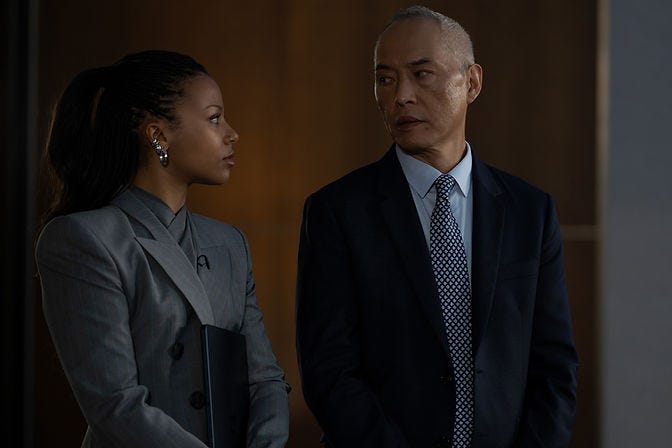
Then there’s Harper.
Someone who clearly believes the self is made.
And I’ll say something slightly controversial and stand on my ten toes when I say: I never disliked Harper. In fact, when I rewatched the show, I felt even more sympathetic towards her.
She just wanted validation from her mother and her brother. She wanted to prove she was the best.
In season two, Harper’s twin brother looks her in the eye and calls her a sociopath, the most selfish person he’s ever met, before calling her a narcissist.
“On the dark days you knew we shared a womb together, but only one of us was going to make it out.”
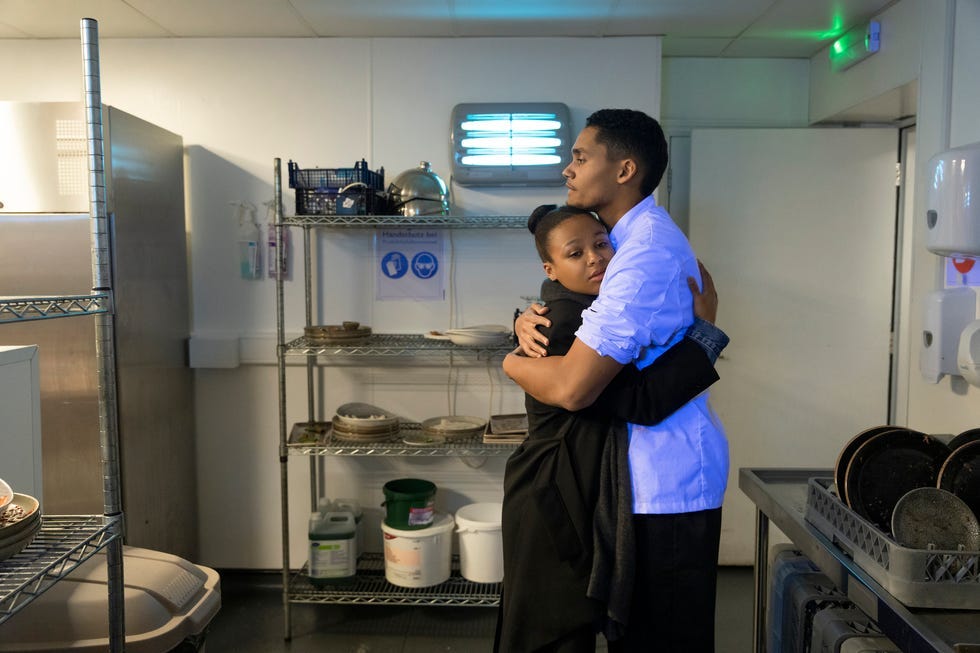
And yes, Harper is selfish. But that ambition seems rooted in the trauma of her upbringing. Her mother created an environment where success was the only acceptable outcome. So Harper internalised that. To her, worth and usefulness are the same thing.
That’s likely where her relentless need to prove herself to Eric comes from, to prove that she deserves to be there. And in return, Harper becomes one of the only people Eric can genuinely respect and feel proud of.
Harper is ruthless, but she’s ruthless with purpose.
It’s also obvious that she’s deeply lonely. Harper rarely talks about her personal life or family, whereas Yasmin is almost entirely defined by hers. The difference is that Harper doesn’t use her history as an excuse; she uses it as fuel.
That doesn’t mean it’s healthy. Not at all.
Harper even admits to Kwabena that anyone she gets close to eventually leaves. And that kind of experience makes it difficult to truly trust people.
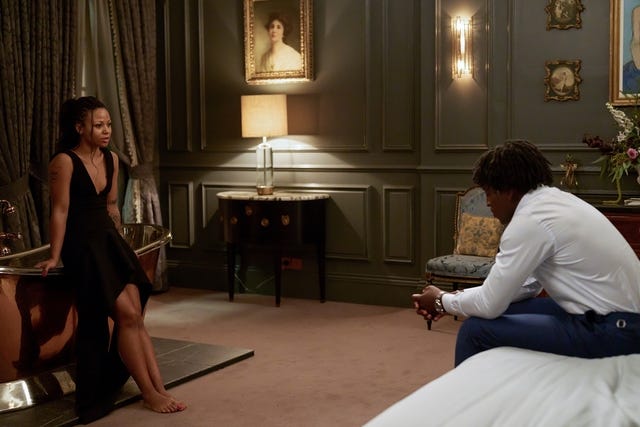
Even in season three, when Harper says “no unilateral decisions” to Petra, you can see that beneath all the ambition, she’s craving intimacy. She wants to be seen. She wants to feel whole; she wants a partnership. Which she tries to find in Eric, who still inevitably leaves her.
Even the short-only fund she builds with Eric hints at that complexity. She tries to create something that both generates profit and holds companies accountable, a kind of white-knight model where responsibility and capitalism coexist. “Both/And.”
Both/And
Which speaks to something Industry constantly reminds us of: two things can be true at the same time.
Harper can be ruthless and still human. She can be ambitious and still lonely. Yasmin can always be surrounded and still lonely. Yasmin can be intelligent but incapable.
This is what I mean when I say these characters feel like exaggerations of the worst of us. They’re not villains. They’re just people in whom very recognisable human traits, the need for validation, the fear of being ordinary, the inability to sit with pain, have been dialled up to their most extreme conclusion. And watching them play out against each other, against the system, against themselves, is genuinely some of the best character writing on TV right now.

Listen to the argument scene here
In the end, I think everyone wants to feel necessary.
But the question is how we try to become necessary.
Industry shows that the paths we take, whether shaped by privilege, ambition, trauma, or resilience, eventually lead back to the same place. Ourselves. Sometimes we find our way there on our own terms. And sometimes the world drills it into you whether you’re ready or not.
And that’s the hardest part.
Looking inward. Being honest about who you are. And deciding whether you’ll continue repeating the systems that shaped you or finally choose something different.
That’s what makes Industry so compelling. It’s not really about finance or banking. It’s about identity, survival, and the uncomfortable truth that most times the person standing in the way of your growth is yourself.